 Xem Studiomeasured geometry
Library › Electronics › Motors ·
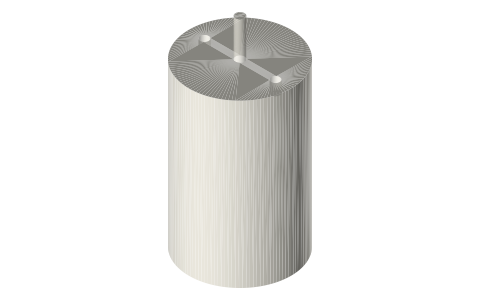
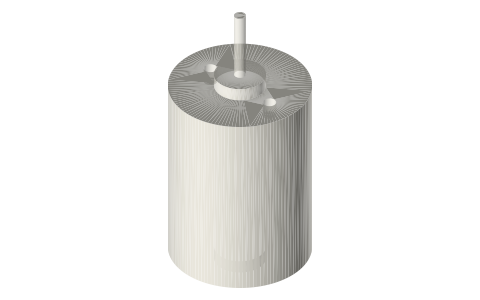
550 / 555 size brushed DC motor: Ø35.8 × 57.0 mm, 2 × M3 on 25
What are the dimensions of a 550 or 555 size DC motor? · Hardware · basis: Mabuchi RS-550PC and RS-555VC dimension drawings; can size and M3-on-25 face also on the RCDrone 555 listing. Envelope only: the outside of the motor at its published sizes. The windings, magnets, brushes and bearings inside are not drawn.
Exact dimensions. Every file is drawn at true size with no printing tolerance. The holes and pins that meet another part are listed below under Mating features, with the fit each joint needs; open those by your printer's or process's clearance before making the part. Mating features
- sizes
- 8 in table
Notes
- Envelope only: the outside of the motor at its published sizes. The windings, magnets, brushes and bearings inside are not drawn.
- The 550 and 555 share one can: Ø35.8 × 57.0 mm. Files: the 550 with its 13.2 mm shaft and the 555 with its 23.2 mm shaft, both measured from the front face.
- The Ø3.17 shaft carries a pinion or a pulley; the 555 sold for drills often has a pressed-on pinion, which is not drawn.
- Two M3 × 0.5 tapped holes on 25.0 mm centres, drawn at the major diameter 4.0 deep: the drawings allow screws 4.0 into the motor.
- Front boss Ø13.0, rear boss Ø10.2; their heights did not come through in a form I could check, so neither is drawn. The drawings' Ø38.5 maximum and the vent holes, terminals and wire exit are not drawn either.
- In DIY Stirling builds, brushed DC motors of this kind are turned by the engine and used as a generator (an LED, a resistor or a meter across the leads) or as a load on the flywheel shaft.
Sizes
| feature | mm | from |
|---|---|---|
| can | Ø35.8 × 57.0 | Mabuchi RS-550PC / RS-555VC |
| shaft | Ø3.17 | Mabuchi drawings |
| shaft from the face | 13.2 (550) / 23.2 (555) | Mabuchi drawings |
| face holes | 2 × M3 × 0.5 on 25.0 | Mabuchi drawings, RCDrone |
| usable screw length | 4.0 | Mabuchi drawings |
| front boss | Ø13.0 (height not given here) | Mabuchi drawings |
| rear boss | Ø10.2 (height not given here) | Mabuchi drawings |
| overall on the drawing | 75.0 (550) / 85.0 (555) | Mabuchi drawings |
Mating features
Drawn at the exact size. Open press, slide, run and socket features by your process's clearance; leave designed gaps and clamp fits as drawn.
| feature | exact | mates with | fit | files |
|---|---|---|---|---|
| shaft | Ø3.17 | pinion, pulley or coupler bore (set screw) | slide | dc-55* |
| mounting holes | 2 × M3 × 0.5 on 25.0, 4.0 usable depth | M3 screws through the mount | designed | dc-55* |
| front boss (not drawn) | Ø13.0 | mount recess | socket | dc-55* |
| can | Ø35.8 | cradle | socket | dc-55* |
Where the files are
Other publishers' files are linked, not hosted. "verify" = check the license at the link before commercial use.
| Mabuchi Motor (compiled catalogue, hosted by mikrocontroller.net) | Carbon-brush and metal-brush motor datasheets incl. RS-360RH, RS-365SH, RS-385SH, RS-550PC, RS-555VC, RS-775VC dimension drawings | manufacturer datasheets verify | |
| RCDrone | 555 brushed motor listing with drawing values: Ø36 × 57, Ø3.175 shaft, two M3 on 25 | web | listing verify |
Free files
★ Free files 2 parts. Generated by Xem Studio from the standard; threads are plain cylinders at major diameter. CC BY 4.0. index.json
| dc-550-size-shaft13.2 | 550 size envelope: Ø35.8 × 57.0 can, Ø3.17 shaft 13.2 from the face, 2 × M3 on 25.0 drawn Ø3.0 × 4.0 (bosses not drawn) | STEP · STL |
| dc-555-size-shaft23.2 | 555 size envelope: Ø35.8 × 57.0 can, Ø3.17 shaft 23.2 from the face, 2 × M3 on 25.0 drawn Ø3.0 × 4.0 (bosses not drawn) | STEP · STL |
Plain text: sheet.txt · JSON: /api/geometry?object=dc-motor-550-555-size
How it fits
Connects to
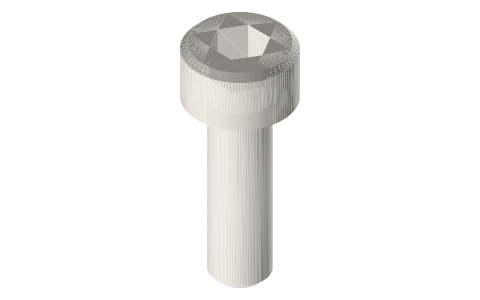 Socket head cap screws, M2–M8two M3 into the face holes, 25.0 apart, 4.0 max into the motor
Alternatives
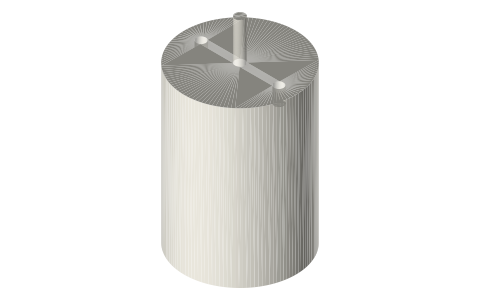 540 size brushed DC motorsame face, 50.0 can
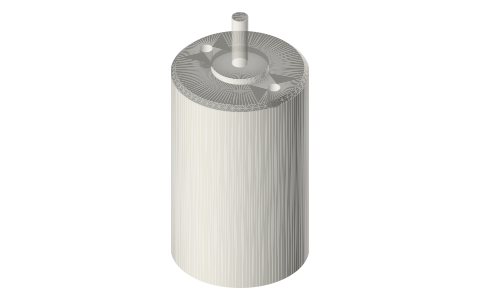 775 brushed DC motor Ø42 × 66.7 mm, Ø5 shaftØ42 can, Ø5 shaft
Also needed
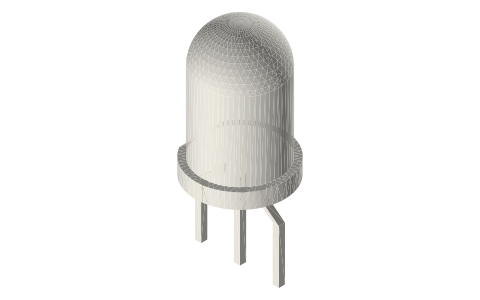 Through-hole LEDsan LED across the leads shows generator output
You might also need
Questions
What are 555 motor dimensions?
Ø35.8 × 57.0 mm can, Ø3.17 shaft (23.2 mm from the face on Mabuchi's RS-555VC), two M3 holes 25.0 apart, Ø13.0 front boss.
What is the 550 motor shaft size?
Ø3.17 (1/8 in), 13.2 mm from the face on Mabuchi's RS-550PC.
550 vs 555?
Same can and face. The difference is inside and in the shaft length the maker fits.