 Xem Studiomeasured geometry
Library › Stirling engines › Heat & regenerator ·
Regenerator and heat materials: stainless mesh counts, steel wool, scrubbers, mica, fiberglass, ceramic, firebrick
What mesh size is used for a Stirling engine regenerator? · Hardware · basis: ASTM E11 wire-mesh sizes (mesh count, wire diameter, opening); steel-wool grades; common insulator sheet and brick sizes
Long Earth Society build part. The regenerator packing and burner insulation on every LES engine. The engines · all LES parts
- sizes
- 9 in table
Notes
- Stainless mesh (ASTM E11), count → wire Ø / opening: #40 → 0.25 / 0.42 mm; #60 → 0.19 / 0.25; #80 → 0.14 / 0.18; #100 → 0.10 / 0.15; #150 → 0.066 / 0.104; #200 → 0.053 / 0.074. Regenerators want #100–#200 at 60–70% porosity (loosely stacked discs); #40–60 for low-temperature demonstrators where flow loss matters more than heat capacity.
- Alternatives by thermal mass per flow loss, best first: stacked stainless mesh discs; stainless pot scrubber (knitted 0.1 mm wire, ~95% porosity, good enough and 1 dollar); steel wool grade 0000 (0.025 mm fibres, rusts, packs too dense if squeezed; grade 0–1 is 0.06–0.09 mm). Copper mesh conducts heat along the regenerator (bad): use stainless.
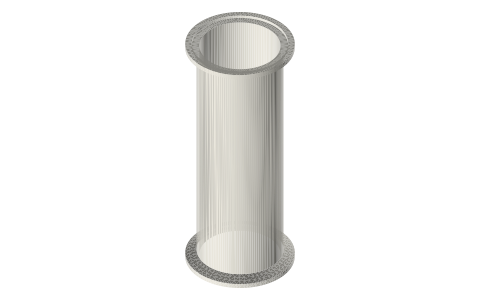
- Insulation: mica sheet 0.1–0.5 mm (gaskets, 500 °C), fiberglass cloth 0.2–0.5 mm (to 540 °C), ceramic fibre blanket 6–25 mm (1260 °C), steatite standoffs (Ø6–12), insulating firebrick 230 × 114 × 64 mm (IFB 23, cuts with a saw). A 2 in spool regenerator holds about Ø47 × 40 mm of mesh = 25–30 discs.
- LES: the regenerator spool between the hot and cold ends is a split printed cage packed with #100 stainless mesh; firebrick under the burner; mica under the hot-end clamp.
Sizes
| material | size | temp_c | use |
|---|---|---|---|
| stainless mesh #100 | 0.10 mm wire, 0.15 opening | 800 | regenerator |
| stainless mesh #200 | 0.053 wire, 0.074 opening | 800 | high-T regenerator |
| stainless scrubber | 0.1 mm knitted | 800 | cheap regenerator |
| steel wool 0000 | 0.025 mm fibre | 400 | demonstrators (rusts) |
| mica sheet | 0.1–0.5 | 500 | gaskets, washers |
| fiberglass cloth | 0.2–0.5 | 540 | wrap, gasket |
| ceramic fibre blanket | 6–25 | 1260 | burner box |
| steatite standoff | Ø6–12 × 10–30 | 1000 | hot-end spacing |
| insulating firebrick | 230 × 114 × 64 | 1260 | burner base |
Where the files are
Other publishers' files are linked, not hosted. "verify" = check the license at the link before commercial use.
| Wikipedia | Mesh (scale) | web | CC BY-SA 4.0 (text) |
| Wikipedia | Regenerative heat exchanger | web | CC BY-SA 4.0 (text) |
| Wikipedia | Steel wool | web | CC BY-SA 4.0 (text) |
| McMaster-Carr | Wire cloth (free STEP per part, for your own design use; no redistribution) | STEP, PDF | McMaster-Carr site terms verify |
| Long Earth Society | Engine and rig builds | web, video | LES site |
Free files
★ Free files 5 parts. Generated by Xem Studio from the standard; threads are plain cylinders at major diameter. CC BY 4.0. index.json
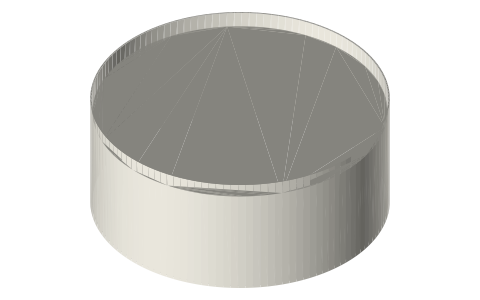
| mesh-disc-40mm-template | regenerator mesh disc template Ø40 × 0.5 (cut stainless mesh to this) | STEP · STL |
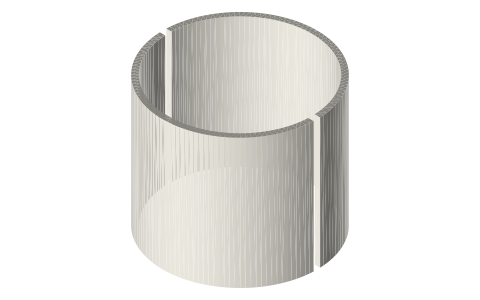
| regenerator-cage-47-5x40 | regenerator cage for a 2 in spool bore (Ø47.5): Ø47.3 × 40, 1.65 wall, split; pack with mesh or scrubber | STEP · STL |
| regenerator-cage-34-8x30 | regenerator cage for a 1.5 in spool bore (Ø34.8): Ø34.6 × 30 | STEP · STL |
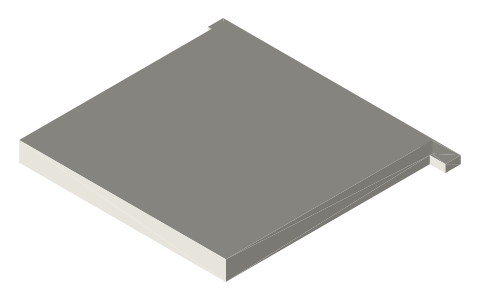
| firebrick-230x114x64 | insulating firebrick (IFB) 9 × 4.5 × 2.5 in: 230 × 114 × 64 mm | STEP · STL |
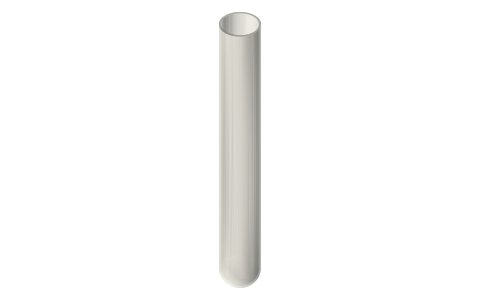
| ceramic-standoff-10x20 | ceramic / steatite standoff Ø10 × 20, Ø4.3 hole | STEP · STL |
Plain text: sheet.txt · JSON: /api/geometry?object=regenerator-and-heat-materials
Fits with
Questions
What mesh size for a Stirling regenerator?
#100 to #200 stainless (0.1–0.05 mm wire) stacked loosely to 60–70% porosity; coarser #40–60 for low-temperature demonstrators. Never copper: it short-circuits the temperature gradient.
Can I use steel wool as a regenerator?
Yes for a demonstrator: grade 0000 packed loosely; it rusts and clogs over months. A stainless pot scrubber is the better 1-dollar option.
What is the wire diameter of #100 mesh?
0.10 mm, with a 0.15 mm opening (ASTM E11); #200 is 0.053 mm wire, 0.074 opening.