 Xem Studiomeasured geometry
Library › Stirling engines › Tri-clamp engine parts ·
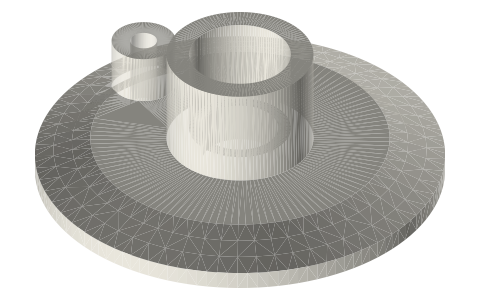
Tri-clamp power head: ISO 2852 cap with a Ø15.9 socket for a 10 mL syringe, 1.5, 2 and 3 in
How do I mount a syringe as the power cylinder on a tri-clamp Stirling engine? · Hardware · basis: ISO 2852 cap face with a Ø15.9 socket (10 mL syringe barrel OD) and an M5 port (Ø4.2 tap hole)
Long Earth Society build part. The displacers and heads the LES tri-clamp engines are built from. The engines
Exact dimensions. Every file is drawn at true size with no printing tolerance. The holes and pins that meet another part are listed below under Mating features, with the fit each joint needs; open those by your printer's or process's clearance before making the part. Mating features
- sizes
- 3 in table
Notes
- An ISO 2852 end cap carrying a 10 mL syringe barrel as the power cylinder, on centre.
- Socket Ø15.9 × 14 deep (floor 8 mm above the face) in a Ø22.9 boss that stands 16 mm off the back of the 6 mm cap; a Ø11.9 port through the floor joins the barrel to the engine.
- Opposite side: an M5 port (Ø4.2 tap hole) in a Ø10 boss for a sensor, a vent or a second transfer line.
- The 10 mL barrel's 14.5 mm bore sweeps about 2 mL per 12 mm of plunger stroke.
Sizes
| size_in | flange_od_mm | socket_mm | socket_depth_mm | port_mm | m5_tap_mm | overall_h_mm |
|---|---|---|---|---|---|---|
| 1.5 | 50.5 | 15.9 | 14 | 11.9 | 4.2 | 22 |
| 2 | 64.0 | 15.9 | 14 | 11.9 | 4.2 | 22 |
| 3 | 91.0 | 15.9 | 14 | 11.9 | 4.2 | 22 |
Mating features
Drawn at the exact size. Open press, slide, run and socket features by your process's clearance; leave designed gaps and clamp fits as drawn.
| feature | exact | mates with | fit | files |
|---|---|---|---|---|
| syringe socket | Ø15.9 | 10 mL syringe barrel | socket | head-power-* |
| head faces | ISO 2852 | ferrule face + Type B gasket | clamp | head-* |
| vent / instrument port | Ø4.2 | M5 tap drill | designed | head-power-* |
Where the files are
Other publishers' files are linked, not hosted. "verify" = check the license at the link before commercial use.
| Long Earth Society | Tri-clamp Stirling engine builds | web, video | LES site |
| James R. Senft | An Introduction to Low Temperature Differential Stirling Engines (displacer and gap design) | book | Moriya Press verify |
| Wikipedia | Stirling engine | web | CC BY-SA 4.0 (text) |
Free files
★ Free files 3 parts. Generated by Xem Studio from the standard; threads are plain cylinders at major diameter. CC BY 4.0. index.json
| head-power-syringe-1.5in | 1.5 in ISO 2852 cap: socket for a 10 mL syringe barrel (Ø15.9) as the power cylinder, M5 instrument/vent port | STEP · STL |
| head-power-syringe-2in | 2 in ISO 2852 cap: socket for a 10 mL syringe barrel (Ø15.9) as the power cylinder, M5 instrument/vent port | STEP · STL |
| head-power-syringe-3in | 3 in ISO 2852 cap: socket for a 10 mL syringe barrel (Ø15.9) as the power cylinder, M5 instrument/vent port | STEP · STL |
Plain text: sheet.txt · JSON: /api/geometry?object=tri-clamp-syringe-head
How it fits
Goes in or on
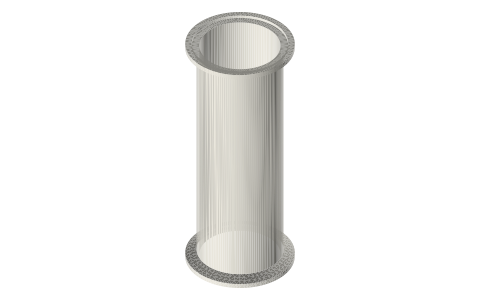 Tri-clamp spool, 1.5 and 2 inchISO 2852 face on the spool or tee ferrule
Connects to
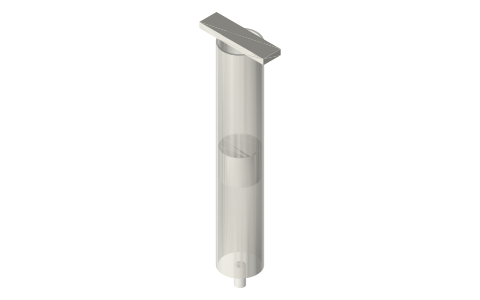 Plastic syringes 1–60 mL as pistons and cylinders10 mL barrel (Ø15.9) in the socket
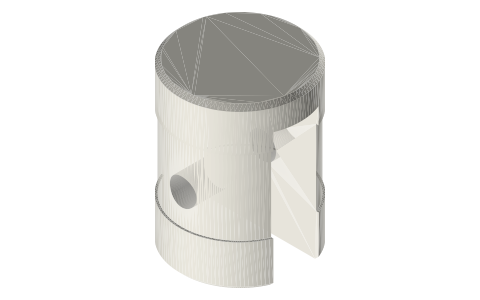 Syringe pistonspiston for the 14.5 mm barrel bore
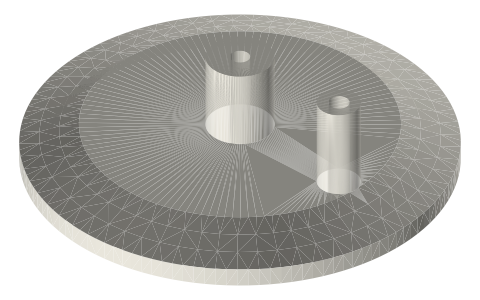 Tri-clamp displacer headtransfer tube from its barb
Also needed
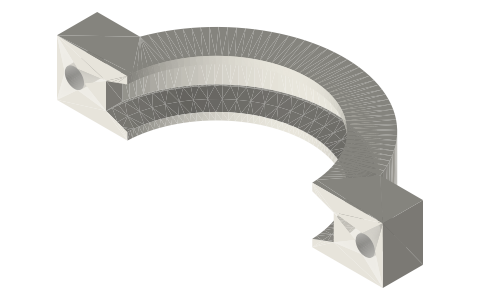 Tri-clamp clamp, two-boltclamp and gasket on the face
Questions
Can I use a syringe as the power cylinder on a tri-clamp engine?
Yes: this head has a Ø15.9 × 14 socket for a 10 mL barrel on centre, with a Ø11.9 port into the engine.
How much does a 10 mL syringe sweep?
Its 14.5 mm bore sweeps about 2 mL per 12 mm of stroke.
What is the M5 hole for?
An extra port: a sensor, a vent or a second line, Ø4.2 for an M5 thread.