 Xem Studiomeasured geometry
Library › Mechanisms › Linkages ·
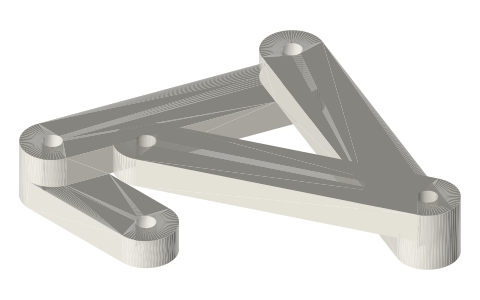
Drag-link (double-crank) four-bar
What is a drag-link mechanism? · Hardware · basis: Xem Studio drawing; classic mechanism (Brown No. 231)
Also called: drag link mechanism, double crank mechanism, grashof four bar, mecanismo de doble manivela, mecanismo de dupla manivela, Doppelkurbel, double manivelle
Exact dimensions. True size, with no printing tolerance added.
- sizes
- 4 in table
Notes
- A four-bar whose shortest link is the fixed frame: both cranks turn fully round. Grashof: s + l ≤ p + q (20 + 50 ≤ 45 + 40).
- Input turns at constant speed, output at varying speed — the base of quick-return drives and some shaper and press mechanisms.
- Built from four-bar links of the lengths in the table.
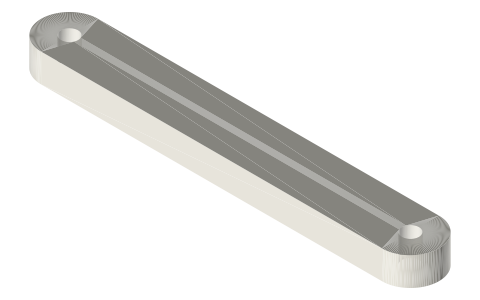
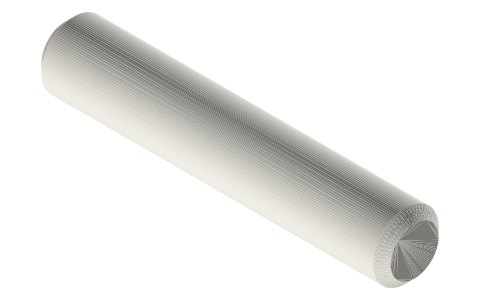
- Parts (each has its own page): four-bar-links, pins-3mm. Brown's movement No. 231 shows it (1868).
Drag-link (double-crank) four-bar size chart
| parameter | value |
|---|---|
| frame (shortest) s | 20 mm |
| input crank | 40 mm |
| coupler | 50 mm |
| output crank | 45 mm |
Where the files are
Other publishers' files are linked, not hosted. "verify" = check the license at the link before commercial use.
| Henry T. Brown (1868, public domain) | Five Hundred and Seven Mechanical Movements — scan on archive.org | web | Publisher's page; dimensions are facts |
Free files
★ Free files 1 parts. Generated by Xem Studio from the standard; threads are plain cylinders at major diameter. CC BY 4.0. index.json
| drag-link-mechanism-assembly | Assembled mechanism, all parts placed (STEP keeps each part separate) | STEP · STL |
https://xemstudio.com/mcp to Claude, ChatGPT, Cursor or any MCP client (free, no account, one minute) and it can look up exact sizes, mating fits and free STEP/STL from every chat.Plain text: sheet.txt · JSON: /api/geometry?object=drag-link-mechanism
Fits with
Questions
What is a drag-link mechanism?
A four-bar whose shortest link is the fixed frame: both cranks turn fully round. Grashof: s + l ≤ p + q (20 + 50 ≤ 45 + 40).