 Xem Studiomeasured geometry
Library › Aircraft design › Wing planforms ·
Dihedral angle
How much dihedral should an RC plane have? · Standard part · basis: Design rules and figures from the cited sources; example geometry by Xem Studio
Also called: dihedral, wing dihedral, how much dihedral rc plane, dihedral angle trainer, dihedral aerobatic plane, dihedral calculator, dihedral roll stability, rudder only dihedral, effective dihedral, dihedral degrees
Exact dimensions. True size, with no printing tolerance added.
- sizes
- 6 in table
Notes
- Dihedral (tips higher than root) adds roll stability, and typically only a few degrees are needed on full-size aircraft (NASA Glenn; ERAU).
- McCombs' RC guidance: rudder-only models want about 9 deg total effective dihedral (high wing 5-7 deg, mid 7-8, low 10-11), while aileron models want essentially 0 deg (mid wing) to 0-2 deg (high/low). Too much dihedral on aileron models cuts roll rate and complicates coordination (Model Aviation).
- Too much dihedral also reduces effective lifting area by cos^2 of the angle (McCombs), and too little fin with small dihedral causes spiral instability (McCombs). Fighters and aerobatic aircraft aim for near-neutral (Kitplanes).
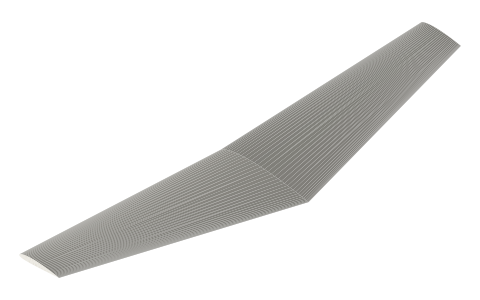
- Used on: Boeing 737.
- The file is a reference example built by Xem Studio from the numbers above. Sizes the sources do not fix are illustrative; scale the example to your own vehicle.
Dihedral angle size chart
| parameter | value or range | source |
|---|---|---|
| RC rudder-only total effective dihedral | about 9 deg | McCombs 1994 |
| Rudder-only: high / mid / low wing | 5-7 / 7-8 / 10-11 deg | McCombs 1994 |
| Aileron RC: mid wing / high & low wing | ~0 deg / 0-2 deg | McCombs 1994 |
| Effective area penalty | S_eff = S cos^2(a) | McCombs 1994 |
| Recovery rate | 6 deg total recovers about half as fast as 12 deg | McCombs 1992 |
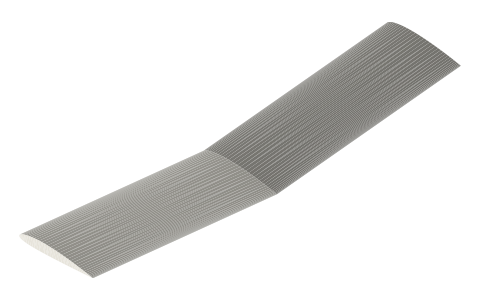
| Reference build | high-wing trainer, 6 deg | McCombs |
Where the files are
Other publishers' files are linked, not hosted. "verify" = check the license at the link before commercial use.
| Model Aviation (AMA), W.F. McCombs | Wing and Tail Dihedral for Models (Dec 1994) | web | Publisher's page; dimensions are facts |
| Model Aviation (AMA), W.F. McCombs | Vertical Tail Size for Models (Apr 1992) | web | Publisher's page; dimensions are facts |
| NASA Glenn Research Center | Beginner's Guide to Aeronautics: Wing Geometry | web | Publisher's page; dimensions are facts |
| Embry-Riddle (Leishman), Introduction to Aerospace Flight Vehicles | Wing Shapes and Nomenclature | web | Publisher's page; dimensions are facts |
| Kitplanes (B. Wainfan) | Wind Tunnel: Roll's role in lateral stability (2008) | web | Publisher's page; dimensions are facts |
Free files
★ Free files 1 parts. Xem Studio design: free to use, print and sell things from; not to be republished as files. Xem Studio Design License. index.json
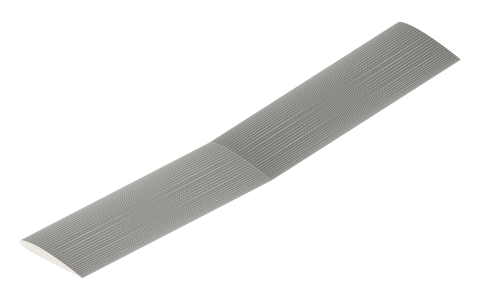
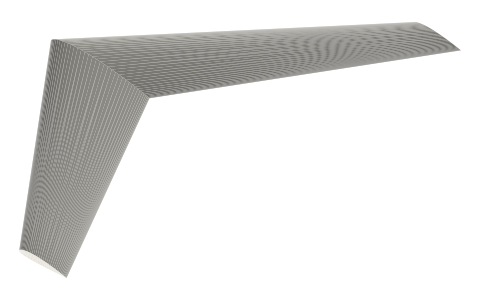
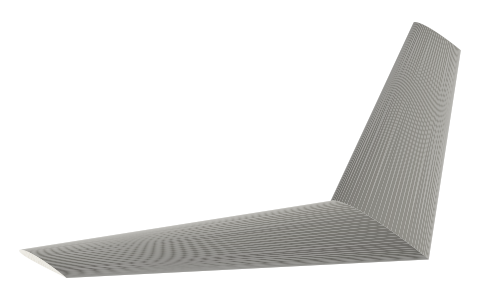
| dihedral-wing | rectangular planform: span 1000, root 200, tip 200 mm, LE sweep 0°, dihedral 6°, NACA 2412 | STEP · STL |
https://xemstudio.com/mcp to Claude, ChatGPT, Cursor or any MCP client (free, no account, one minute) and it can look up exact sizes, mating fits and free STEP/STL from every chat.Plain text: sheet.txt · JSON: /api/geometry?object=dihedral
Fits with
Questions
Trainer vs aerobatic dihedral?
Rudder-only trainers ~5-7 deg on a high wing; aileron aerobatic mid-wings ~0 deg (McCombs).