 Xem Studiomeasured geometry
Library › Aircraft design › Ground-effect design ·
Ground effect: height/chord ratio (ram / chord-dominated regime)
What height-to-chord ratio do WIG craft fly at? · Standard part · basis: Design rules and figures from the cited sources; example geometry by Xem Studio
Also called: ground effect height chord ratio, h/c ratio wig, extreme ground effect, ram effect wing, chord dominated ground effect, wig cruise height, ekranoplan flight height, ground effect lift to drag, wig l/d
Exact dimensions. True size, with no printing tolerance added.
- sizes
- 7 in table
Notes
- Rozhdestvensky defines extreme ground effect as clearances of 10% of the main wing chord or less, distinguishing chord-dominated ground effect (flow stagnation under the wing) from span-dominated (induced-drag reduction).
- Moore et al. split ram effect (h/c <= 10%) from normal ground effect, and a review concludes rectangular wings are most effective within 15% of chord (Frontiers 2022 review).
- An isolated AR 2-3 wing at about 20% chord clearance reaches L/D of roughly 35-45, but hull, pylons and tail cut that by about 65% to 12-16 for a whole craft (Rozhdestvensky, citing Kirillovykh).
- The file is a reference example built by Xem Studio from the numbers above. Sizes the sources do not fix are illustrative; scale the example to your own vehicle.
Ground effect: height/chord ratio size chart
| parameter | value or range | source |
|---|---|---|
| Extreme ground effect | h <= 10% chord | Rozhdestvensky 2006 |
| Ram effect regime | h/c <= 10% | Frontiers 2022 (Moore et al.) |
| Most effective (rectangular wings) | within 15% chord | Frontiers 2022 |
| Isolated wing L/D, AR 2-3 at 20% c | 35-45 | Rozhdestvensky (Kirillovykh) |
| Whole-vehicle L/D after integration | 12-16 (losses: hull ~40%, pylons ~15%, tail ~5%) | Rozhdestvensky |
| Proposed GE-zone definition | height where lift is ~30% above free-flight value | Rozhdestvensky |
| Reference build | span 600, chord 300 | computed (AR 2) |
Where the files are
Other publishers' files are linked, not hosted. "verify" = check the license at the link before commercial use.
| Progress in Aerospace Sciences (K.V. Rozhdestvensky, 2006) | Wing-in-ground effect vehicles (review) | web | Publisher's page; dimensions are facts |
| Frontiers in Aerospace Engineering (2022) | Review of ground-effect experiments on rectangular, reverse-delta and delta wings | web | Publisher's page; dimensions are facts |
| NASA Langley (Fink & Lastinger) | Aerodynamic Characteristics of Low-Aspect-Ratio Wings in Close Proximity to the Ground, NASA TN D-926 (1961) | web | Publisher's page; dimensions are facts |
Free files
★ Free files 1 parts. Xem Studio design: free to use, print and sell things from; not to be republished as files. Xem Studio Design License. index.json
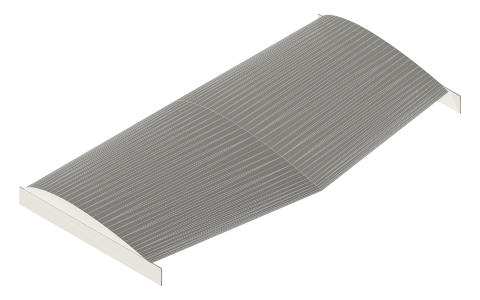
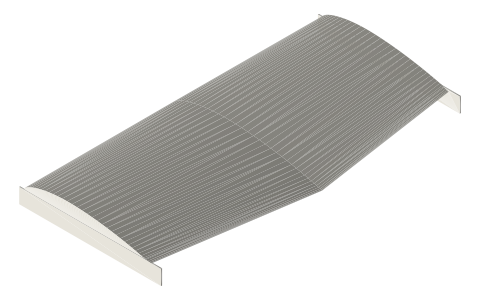
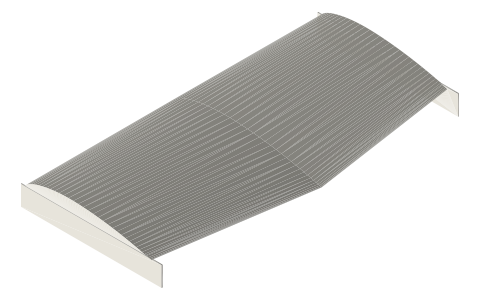
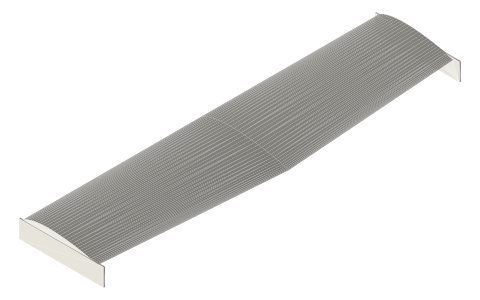
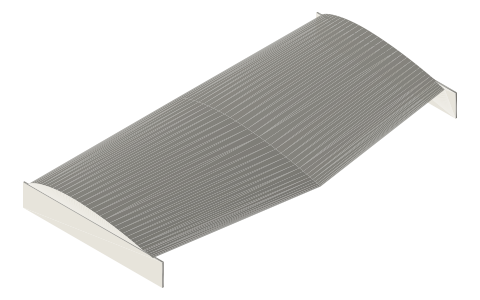
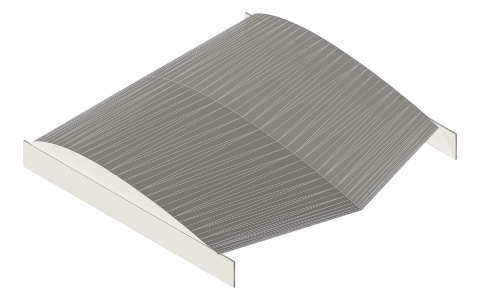
| ground-effect-height-chord-ratio-wing | endplated wing: span 600, chord 300 mm, anhedral 0°, endplates 30 mm (scale to your craft) | STEP · STL |
https://xemstudio.com/mcp to Claude, ChatGPT, Cursor or any MCP client (free, no account, one minute) and it can look up exact sizes, mating fits and free STEP/STL from every chat.Plain text: sheet.txt · JSON: /api/geometry?object=ground-effect-height-chord-ratio
Fits with
Questions
How high should a WIG model fly?
Extreme ground effect is below 10% of chord; reviews put rectangular wings' sweet spot within 15% chord (Rozhdestvensky; Frontiers).