 Xem Studiomeasured geometry
Library › Mechanisms › Pulleys and tackle ·
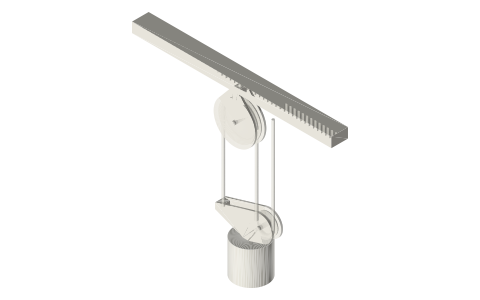
Two single blocks rove to advantage (3 : 1)
Why does it matter which block the hauling part leaves? · Hardware · basis: Xem Studio design following Brown No. 22 (1868)
Also called: rove to advantage, gun tackle, luff tackle, 3 to 1 pulley, aparejo a favor (3:1), Talje mit Vorteil geschoren (3:1)
Exact dimensions. True size, with no printing tolerance added.
- sizes
- 4 in table
Notes
- With one upper and one lower single block, the standing end can be made fast to the lower block and the hauling part led off it upward: then three strands act on the moving block and P = W/3. Rove the other way (hauling part off the fixed block) the same blocks give only 2 : 1.
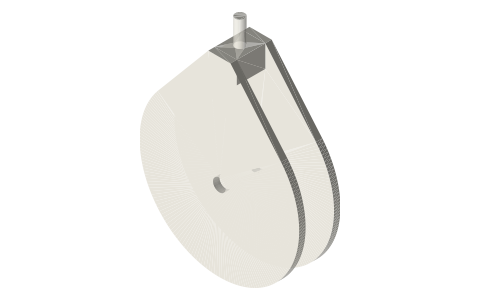
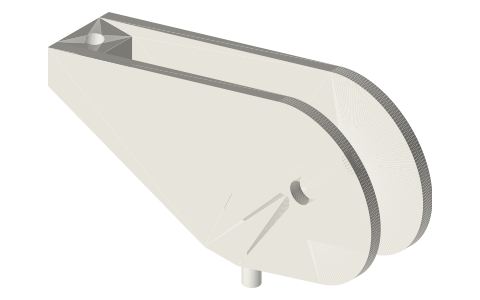
- Pitch-Ø40 upper block, pitch-Ø20 lower block with an arm carrying the standing end 50 mm to the side; hauling part goes up at x = 40. The weight stem sits on the line of the three strands' resultant (x = 13.33).
- Brown's No. 22 (a pulley combination following the doubling rule).
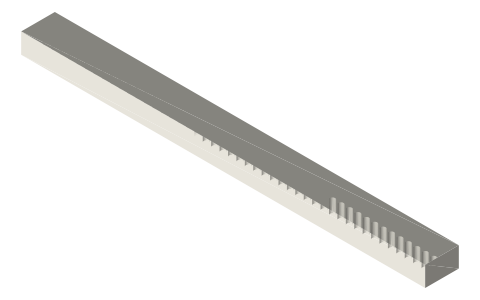
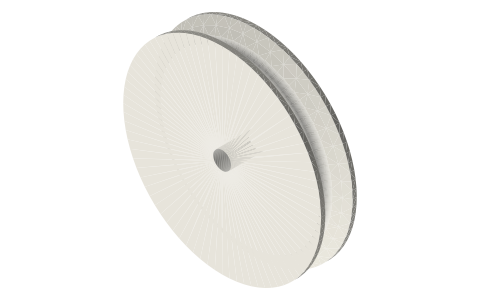
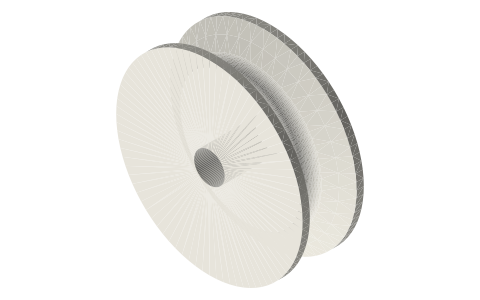
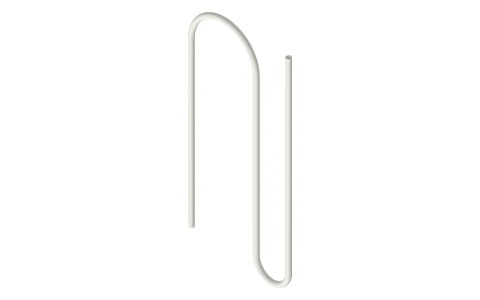
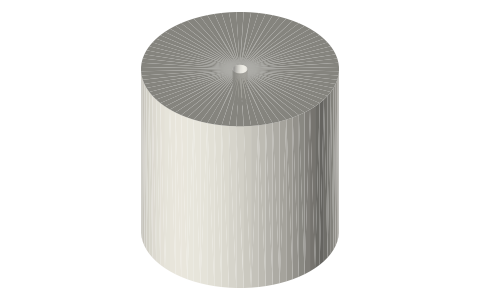
- Parts (each has its own page): tackle-beam-240-sockets, tackle-block-20-top-stem, tackle-block-10-advantage, rope-sheave-3mm-pitch-40, rope-sheave-3mm-pitch-20, ropes-3mm-tackle-rove-to-advantage, tackle-weight-d40x40-socket, dowel-pins-metric.
- Brown's movement No. 22 (1868) shows it; this model is a Xem Studio design following his figure, every part at true size.
Two single blocks rove to advantage size chart
| parameter | value |
|---|---|
| upper block | pitch Ø40 |
| lower block | pitch Ø20 + arm |
| strands on the load | 3 |
| mechanical advantage | 3 (2 if rove to disadvantage) |
Where the files are
Other publishers' files are linked, not hosted. "verify" = check the license at the link before commercial use.
| Henry T. Brown (1868, public domain) | Five Hundred and Seven Mechanical Movements — scan on archive.org | web | Publisher's page; dimensions are facts |
| 507movements.com | Brown's movement No. 22: figure, his text and an animation | web | Publisher's page; dimensions are facts |
Free files
★ Free files 1 parts. Xem Studio design: free to use, print and sell things from; not to be republished as files. Xem Studio Design License. index.json
| tackle-rove-to-advantage-mechanism-assembly | Assembled mechanism, all parts placed at one pose (STEP keeps each part separate) | STEP · STL |
https://xemstudio.com/mcp to Claude, ChatGPT, Cursor or any MCP client (free, no account, one minute) and it can look up exact sizes, mating fits and free STEP/STL from every chat.Plain text: sheet.txt · JSON: /api/geometry?object=tackle-rove-to-advantage-mechanism
Fits with
Questions
Why does it matter which block the hauling part leaves?
With one upper and one lower single block, the standing end can be made fast to the lower block and the hauling part led off it upward: then three strands act on the moving block and P = W/3. Rove the other way (hauling part off the fixed block) the same blocks give only 2 : 1.