 Xem Studiomeasured geometry
Library › Stirling engines › Drives & mechanisms ·
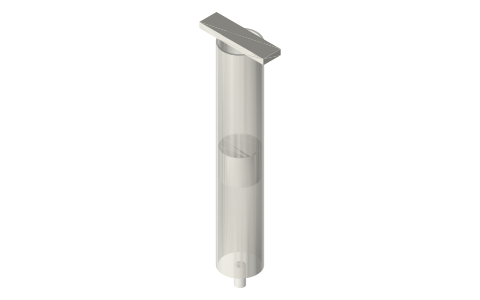
Power cylinder liners, piston blanks, crosshead and guide (the non-syringe power piston)
How do I make a power piston and cylinder for a Stirling engine without a syringe? · Hardware · basis: Trunk piston and crosshead practice for model engines: clearance-seal piston lapped into a honed liner (10–25 µm radial), or a graphite piston in a glass tube; crosshead takes the con-rod side load so the piston only moves axially
Long Earth Society build part. The graphite-in-glass power piston on the LES gamma. The engines
- sizes
- 4 in table
Notes
- Two ways to seal: (1) lapped fit: brass or aluminium piston turned 0.05 under, lapped with fine compound into a honed brass/stainless liner until it falls through slowly under its own weight; (2) graphite piston in a borosilicate glass tube (16 or 20 mm test tube / tube): self-lubricating, near-zero friction, the premium option. Printed liners and pistons here are for prototyping the layout; a printed piston will not seal.
- Sizes: Ø16 (1.65 mL per 12 mm stroke... see table), Ø20, Ø25, Ø30. For the 2 in tri-clamp gamma with the Ø46 × 90 displacer at 20 mm stroke, a Ø20 × 12 mm stroke piston (3.8 mL) is in the right range; Ø16 at 15 mm for the 1.5 in.
- Crosshead: a Ø8 slider on the Ø3 piston rod running in a guide bushing; the con-rod's angle pushes sideways on the crosshead, not the piston, so the lapped seal stays round. Trunk alternative: wrist pin in the piston boss, con-rod directly on it; fine for short rods (L ≥ 4 × stroke).
- Flange: 4 × M3 on a Ø(D + 16) circle, matches the power head's socket pattern when drilled; seal with a paper or silicone gasket.
Sizes
| bore_mm | liner_len_mm | piston_len_mm | ml_per_12mm_stroke |
|---|---|---|---|
| 16 | 40 | 14 | 2.41 |
| 20 | 45 | 18 | 3.77 |
| 25 | 50 | 22 | 5.89 |
| 30 | 55 | 27 | 8.48 |
Where the files are
Other publishers' files are linked, not hosted. "verify" = check the license at the link before commercial use.
| Wikipedia | Crosshead | web | CC BY-SA 4.0 (text) |
| Wikipedia | Piston | web | CC BY-SA 4.0 (text) |
| James R. Senft | Miniature Stirling engine piston fits (LTD book) | book | reference verify |
| Long Earth Society | Engine builds | web, video | LES site |
Free files
★ Free files 11 parts. Generated by Xem Studio from the standard; threads are plain cylinders at major diameter. CC BY 4.0. index.json
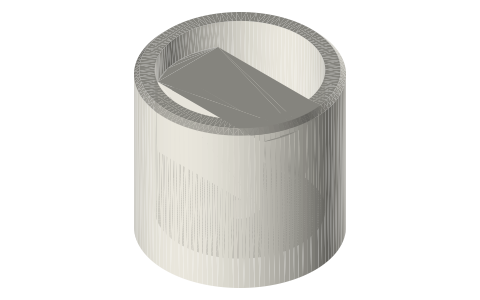
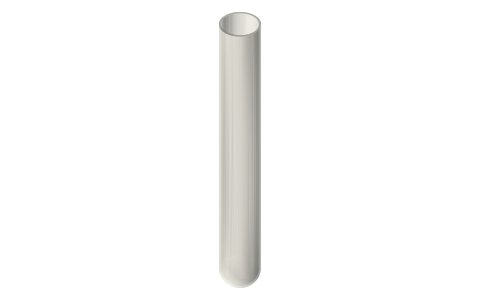
| liner-16x40-flanged | power cylinder liner Ø16 bore × 40, 3 wall, 4 × M3 flange (print to prototype; real liner = honed brass/stainless tube or a glass tube) | STEP · STL |
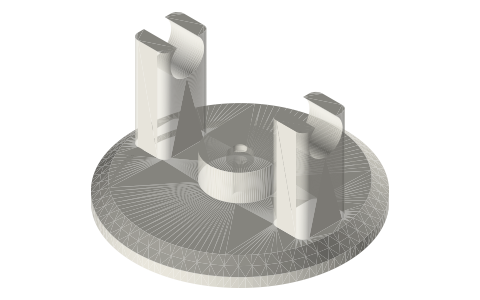
| piston-16x14-blank | piston blank Ø15.9 × 14: lap to fit; Ø3 rod boss and a Ø3 wrist-pin boss | STEP · STL |
| liner-20x45-flanged | power cylinder liner Ø20 bore × 45, 3 wall, 4 × M3 flange (print to prototype; real liner = honed brass/stainless tube or a glass tube) | STEP · STL |
| piston-20x18-blank | piston blank Ø19.9 × 18: lap to fit; Ø3 rod boss and a Ø3 wrist-pin boss | STEP · STL |
| liner-25x50-flanged | power cylinder liner Ø25 bore × 50, 3 wall, 4 × M3 flange (print to prototype; real liner = honed brass/stainless tube or a glass tube) | STEP · STL |
| piston-25x22-blank | piston blank Ø24.9 × 22: lap to fit; Ø3 rod boss and a Ø3 wrist-pin boss | STEP · STL |
| liner-30x55-flanged | power cylinder liner Ø30 bore × 55, 3 wall, 4 × M3 flange (print to prototype; real liner = honed brass/stainless tube or a glass tube) | STEP · STL |
| piston-30x27-blank | piston blank Ø29.9 × 27: lap to fit; Ø3 rod boss and a Ø3 wrist-pin boss | STEP · STL |
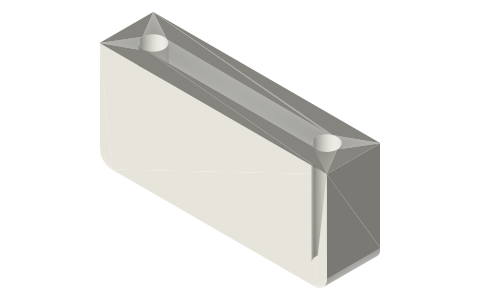
| crosshead-8mm-rod3 | crosshead: Ø8 slider on a Ø3 piston rod with a clevis for the con-rod (keeps side load off the piston) | STEP · STL |
| crosshead-guide-8mm | crosshead guide: Ø8.15 bore × 30, flange with 2 × M3 (or press a 8 × 12 bushing in) | STEP · STL |
| wrist-pin-3x16 | Ø3 × 16 wrist pin (dowel) for the piston boss | STEP · STL |
Plain text: sheet.txt · JSON: /api/geometry?object=power-cylinder-piston-crosshead
How it fits
Goes in or on
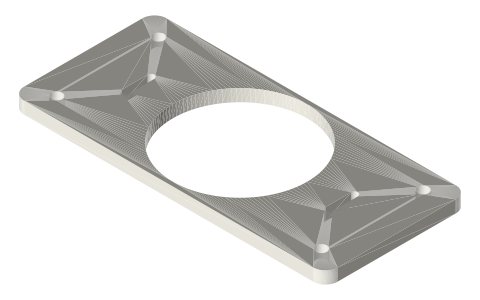 Gamma frameliner on the base plate
Connects to
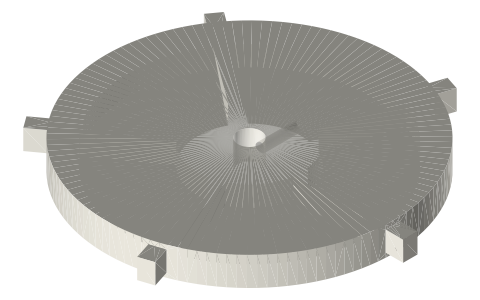 Crank discs, connecting rods and flywheels for…con-rod to the crosshead clevis
Alternatives
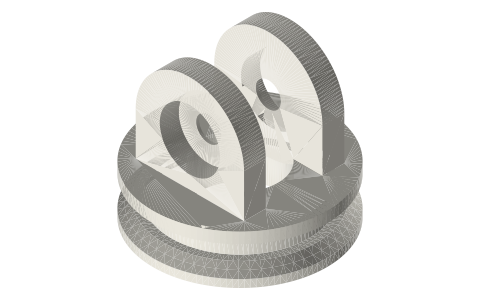 Tri-clamp power pistons and crank linkagefull-bore piston in the spool itself
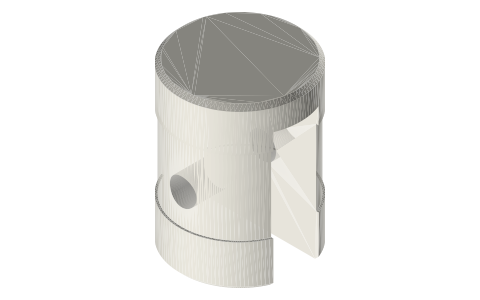 Syringe pistonssyringe barrel as the cylinder
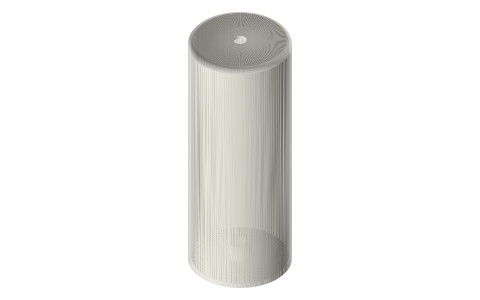 Free-piston Stirling coreØ30 / Ø40 piston blanks
Also needed
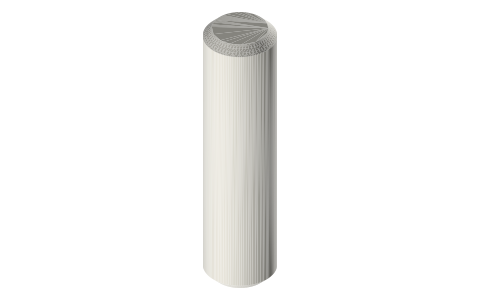 Dowel pins, 2–6 mmØ3 wrist pin
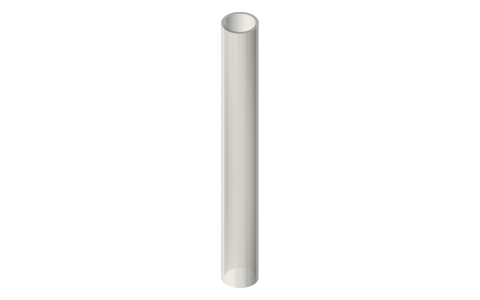 Hobby brass tube, 1/16–21/32 in and 1–12 mm,…or a glass / brass tube as a real liner
In these build lists
Gamma Stirling, 2 in tri-clampThe Long Earth Society engine: hot spool, shell displacer, graphite or syringe p…You might also need
Questions
What is the best power piston for a hobby Stirling engine?
A graphite piston in a borosilicate glass tube: no lubrication, near-zero friction, good seal. Next best: a lapped brass piston in a brass liner. A syringe is the quick version.
How tight should a Stirling piston fit?
Clearance seal: 10–25 µm radial. Test: the piston should slide slowly through the liner under its own weight with the far end closed by a finger, and stop when it is uncovered.
Why use a crosshead?
It takes the con-rod's sideways push so the piston sees only axial motion: the lapped fit stays round and friction stays low. Use one whenever the con-rod is short or the piston is lapped.