 Xem Studiomeasured geometry
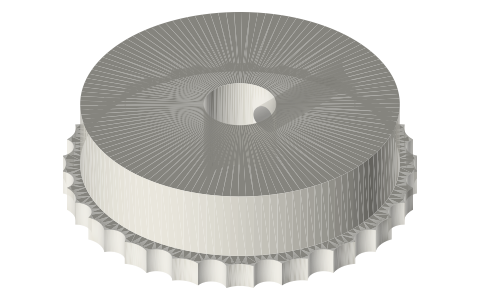
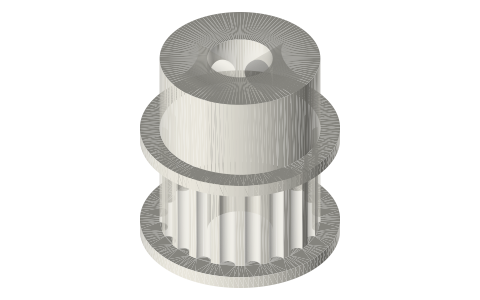
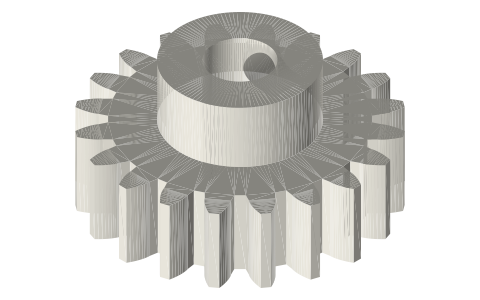
Roller chain sprockets: #25 (6.35 mm) and #35 (9.525 mm), 10–40 T
What is the pitch diameter of a 20 tooth #25 sprocket? · Hardware · basis: ANSI B29.1 roller chain: #25 pitch 6.35 mm, roller Ø3.30, width 3.18; #35 pitch 9.525, roller Ø5.08, width 4.78; #40 pitch 12.70, roller Ø7.92. PD = pitch / sin(180°/N), OD ≈ pitch × (0.6 + cot(180°/N))
Long Earth Society build part. Flywheel-to-alternator drive on the larger LES engines. The engines · all LES parts
- sizes
- 12 in table
Notes
- #25 is the small 'bicycle-chain-looking' chain on printers and robots: 6.35 mm (1/4 in) pitch, Ø3.30 rollers, 3.18 mm inner width. #35 is 3/8 in pitch (go-karts, heavier robots). #40 is 1/2 in (bicycles use 1/2 in pitch too but a narrower #410/#415 width).
- Pitch diameter = pitch / sin(180°/N): #25 20 T → 40.6 mm; #35 20 T → 60.9 mm. Centre distance between sprockets must put a whole number of links on the chain: L (links) = 2C/p + (N1 + N2)/2 + (N2 − N1)²p/(4π²C); round to an even number.
- Tooth profile here is the simple roller-seat form (ANSI 'standard' profile approximated): printed PETG #25 sprockets run fine at model speeds; buy steel for anything over 50 W.
- LES: #25 chain from the flywheel to the generator where a belt would slip on a hot shaft; 10 T on the engine, 30 T on the alternator.
Sizes
| chain | teeth | pitch_dia_mm | od_mm | pitch_mm |
|---|---|---|---|---|
| #25 | 10 | 20.55 | 23.35 | 6.35 |
| #25 | 12 | 24.53 | 27.51 | 6.35 |
| #25 | 15 | 30.54 | 33.68 | 6.35 |
| #25 | 20 | 40.59 | 43.9 | 6.35 |
| #25 | 25 | 50.66 | 54.08 | 6.35 |
| #25 | 30 | 60.75 | 64.23 | 6.35 |
| #25 | 40 | 80.93 | 84.49 | 6.35 |
| #35 | 10 | 30.82 | 35.03 | 9.525 |
| #35 | 12 | 36.8 | 41.26 | 9.525 |
| #35 | 15 | 45.81 | 50.53 | 9.525 |
| #35 | 20 | 60.89 | 65.85 | 9.525 |
| #35 | 30 | 91.12 | 96.34 | 9.525 |
Where the files are
Other publishers' files are linked, not hosted. "verify" = check the license at the link before commercial use.
| Wikipedia | Roller chain | web | CC BY-SA 4.0 (text) |
| McMaster-Carr | Roller chain sprockets (free STEP per part, for your own design use; no redistribution) | STEP, PDF | McMaster-Carr site terms verify |
| Wikipedia | Sprocket | web | CC BY-SA 4.0 (text) |
| Long Earth Society | Engine and rig builds | web, video | LES site |
Free files
★ Free files 12 parts. Generated by Xem Studio from the standard; threads are plain cylinders at major diameter. CC BY 4.0. index.json
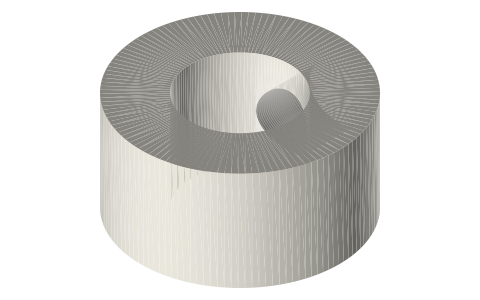
| sprocket-25-10t-b8 | #25 chain (6.35 mm pitch), 10 T, PD 20.55, Ø8 bore hub with M3 set screw | STEP · STL |
| sprocket-25-12t-b8 | #25 chain (6.35 mm pitch), 12 T, PD 24.53, Ø8 bore hub with M3 set screw | STEP · STL |
| sprocket-25-15t-b8 | #25 chain (6.35 mm pitch), 15 T, PD 30.54, Ø8 bore hub with M3 set screw | STEP · STL |
| sprocket-25-20t-b8 | #25 chain (6.35 mm pitch), 20 T, PD 40.59, Ø8 bore hub with M3 set screw | STEP · STL |
| sprocket-25-25t-b8 | #25 chain (6.35 mm pitch), 25 T, PD 50.66, Ø8 bore hub with M3 set screw | STEP · STL |
| sprocket-25-30t-b8 | #25 chain (6.35 mm pitch), 30 T, PD 60.75, Ø8 bore hub with M3 set screw | STEP · STL |
| sprocket-25-40t-b8 | #25 chain (6.35 mm pitch), 40 T, PD 80.93, Ø8 bore hub with M3 set screw | STEP · STL |
| sprocket-35-10t-b8 | #35 chain (9.525 mm pitch), 10 T, PD 30.82, Ø8 bore hub with M3 set screw | STEP · STL |
| sprocket-35-12t-b8 | #35 chain (9.525 mm pitch), 12 T, PD 36.80, Ø8 bore hub with M3 set screw | STEP · STL |
| sprocket-35-15t-b8 | #35 chain (9.525 mm pitch), 15 T, PD 45.81, Ø8 bore hub with M3 set screw | STEP · STL |
| sprocket-35-20t-b8 | #35 chain (9.525 mm pitch), 20 T, PD 60.89, Ø8 bore hub with M3 set screw | STEP · STL |
| sprocket-35-30t-b8 | #35 chain (9.525 mm pitch), 30 T, PD 91.12, Ø8 bore hub with M3 set screw | STEP · STL |
Plain text: sheet.txt · JSON: /api/geometry?object=roller-chain-sprockets
Fits with
Questions
What is the pitch diameter of a 20 tooth #25 sprocket?
40.64 mm (6.35 / sin 9°); outside diameter about 43.3 mm. A 10 T is 20.55 mm PD.
What is the difference between #25 and #35 chain?
Pitch: 6.35 mm vs 9.525 mm; roller Ø3.30 vs Ø5.08; width 3.18 vs 4.78 mm. Sprockets are not interchangeable.
How do I calculate chain length?
L = 2C/p + (N1+N2)/2 + (N2−N1)²·p/(4π²·C) links, rounded to an even number; then adjust C so the chain is snug with 2–3% sag.