 Xem Studiomeasured geometry
Library › Aircraft design › Ground-effect design ·
WIG pitch and height stability (moving centre of pressure)
Why are ground-effect craft hard to keep stable in pitch? · Standard part · basis: Design rules and figures from the cited sources; example geometry by Xem Studio
Also called: wig stability, ground effect pitch stability, irodov criterion, ekranoplan stability, wig centre of pressure, height stability ground effect, wig model pitch up, ground effect porpoising, wig cg location
Exact dimensions. True size, with no printing tolerance added.
- sizes
- 4 in table
Notes
- In ground effect the centre of pressure moves with both pitch and height, so a craft can be stable in one and not the other. The Irodov criterion requires the aerodynamic centre in height to lie upstream of the centre in pitch (Rozhdestvensky).
- Remedies: a large tail kept out of ground effect (KM up to 50% of wing area), a reverse-delta planform that limits c.p. shift, or for flying wings, profiling and automatic damping, which have a small stable range (Rozhdestvensky).
- NASA found ground-effect wings had height stability at positive and instability at negative angles of attack, favouring positive-AoA cruise (NASA TN D-926); over waves, ram pressure raised lift at the cost of pitch stability (Frontiers 2022).
- Used on: KM (Caspian Sea Monster), Lippisch X-113.
- The file is a reference example built by Xem Studio from the numbers above. Sizes the sources do not fix are illustrative; scale the example to your own vehicle.
WIG pitch and height stability size chart
| parameter | value or range | source |
|---|---|---|
| Irodov criterion | centre in height upstream of centre in pitch | Rozhdestvensky 2006 |
| Height stability sign | stable at +AoA, unstable at -AoA | NASA TN D-926 |
| Tail size for stability (KM) | up to 50% of wing area | Rozhdestvensky 2006 |
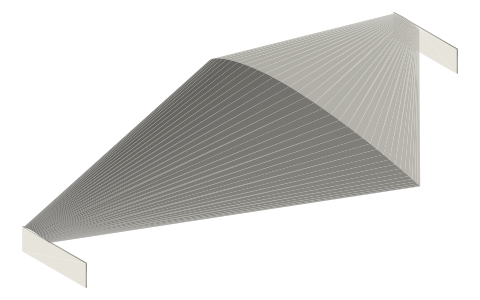
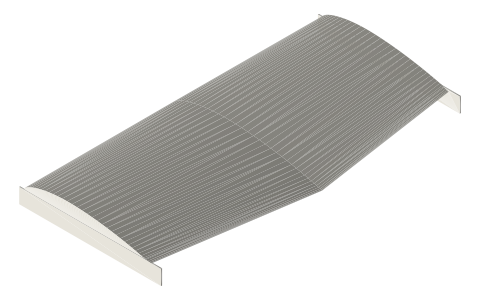
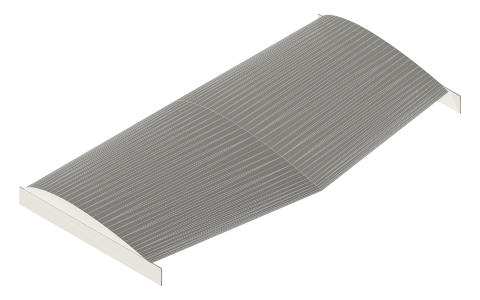
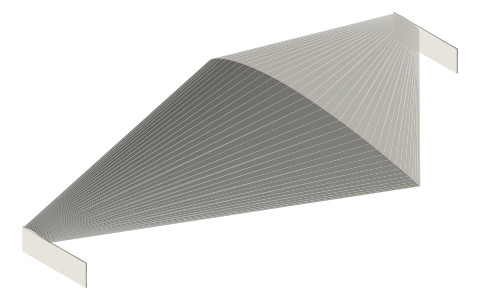
| Reference build | reverse delta 700 x 400, anhedral 15 | computed |
Where the files are
Other publishers' files are linked, not hosted. "verify" = check the license at the link before commercial use.
| Progress in Aerospace Sciences (K.V. Rozhdestvensky, 2006) | Wing-in-ground effect vehicles (review) | web | Publisher's page; dimensions are facts |
| NASA Langley (Fink & Lastinger) | Aerodynamic Characteristics of Low-Aspect-Ratio Wings in Close Proximity to the Ground, NASA TN D-926 (1961) | web | Publisher's page; dimensions are facts |
| Frontiers in Aerospace Engineering (2022) | Review of ground-effect experiments on rectangular, reverse-delta and delta wings | web | Publisher's page; dimensions are facts |
Free files
★ Free files 1 parts. Xem Studio design: free to use, print and sell things from; not to be republished as files. Xem Studio Design License. index.json
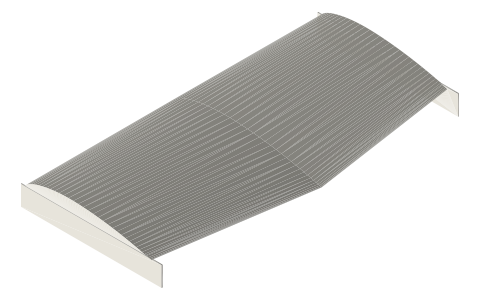
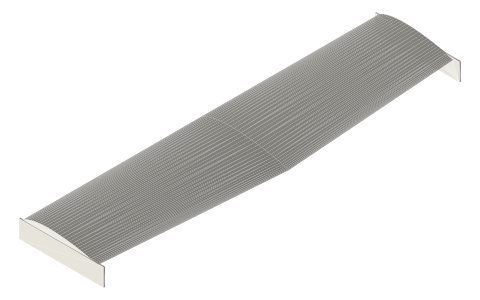
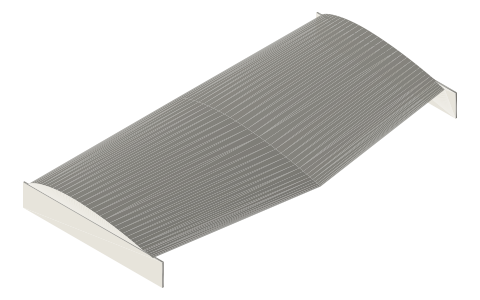
| wig-pitch-height-stability-wing | Lippisch reverse delta: straight leading edge, trailing edge swept forward to the tips, span 700, root 400 mm, anhedral 15°, endplates 40 mm (scale to your craft) | STEP · STL |
https://xemstudio.com/mcp to Claude, ChatGPT, Cursor or any MCP client (free, no account, one minute) and it can look up exact sizes, mating fits and free STEP/STL from every chat.Plain text: sheet.txt · JSON: /api/geometry?object=wig-pitch-height-stability
Fits with
Questions
Why does my WIG model pitch up near the ground?
Its centre of pressure moves with height; Irodov's criterion and a large out-of-effect tail address this (Rozhdestvensky).