 Xem Studiomeasured geometry
Library › Car design › Car aero ·
Gurney flap / wickerbill
What is a Gurney flap (wickerbill) and how tall should it be? · Standard part · basis: Design rules and figures from the cited sources; example geometry by Xem Studio
Also called: gurney flap, wickerbill, wicker bill, gurney lip, trailing edge tab, gurney flap height, gurney flap percent chord, Liebeck gurney flap, wing lip spoiler, rc wing wickerbill, gurney tab
Exact dimensions. True size, with no printing tolerance added.
- sizes
- 7 in table
Notes
- A Gurney flap, also called a wickerbill, is a small tab at the trailing edge set at right angles to the pressure side (Wikipedia, citing Van Dam and Storms & Jang). It raises lift by changing the trailing-edge Kutta condition and creates a pair of counter-rotating vortices behind it.
- Liebeck tested a 1.25%-chord flap (0.0125c) and found better lift and, unexpectedly, lower drag; he stated that flaps much taller than about 0.0125c would probably show drag penalties (NASA TM-4071).
- Dan Gurney first used it in 1971 on Bobby Unser's car; HPA describes it as a way to add downforce once wing angle is maxed out.
- Used on: Eagle Indy cars (Dan Gurney, 1971), Sikorsky S-76B horizontal stabiliser, Bell JetRanger.
- The file is a reference example built by Xem Studio from the numbers above (gurney_h = 1.25% of 250 mm chord (Liebeck).). Sizes the sources do not fix are illustrative; scale the example to your own vehicle.
Gurney flap / wickerbill size chart
| parameter | value or range | source |
|---|---|---|
| Liebeck test height | 0.0125c (1.25% chord) | NASA TM-4071 |
| Height above which drag penalty expected (Liebeck) | > ~0.0125c | NASA TM-4071 |
| Typical height | 1-2% of chord | Wikipedia (Storms & Jang 1994) |
| Club-car wing gurney | about 10-20 mm tall | HPA rear wing |
| Splitter edge gurney/upkick | about 20-30 mm | HPA splitter |
| First use | 1971 (Dan Gurney, Bobby Unser) | Wikipedia |
| Liebeck paper introducing it | AIAA 76-406 (1976) | Wikipedia |
Where the files are
Other publishers' files are linked, not hosted. "verify" = check the license at the link before commercial use.
| NASA (NTRS) | A Water Tunnel Study of Gurney Flaps, NASA TM-4071 (Neuhart & Pendergraft, 1988) | web | Publisher's page; dimensions are facts |
| Wikipedia | Gurney flap | web | Publisher's page; dimensions are facts |
| High Performance Academy | Aerodynamic performance devices for club level cars: rear wing theory | web | Publisher's page; dimensions are facts |
| High Performance Academy | Aerodynamic performance devices for club level cars: front splitters | web | Publisher's page; dimensions are facts |
Free files
★ Free files 1 parts. Xem Studio design: free to use, print and sell things from; not to be republished as files. Xem Studio Design License. index.json
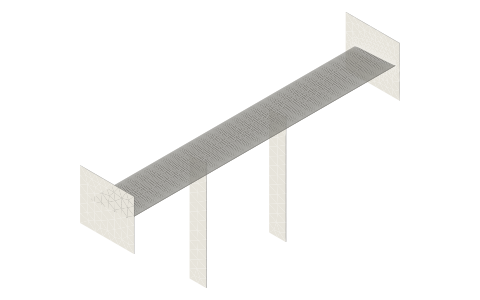
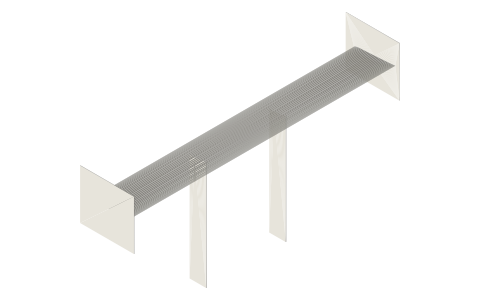
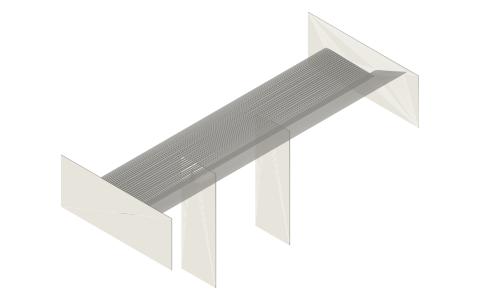
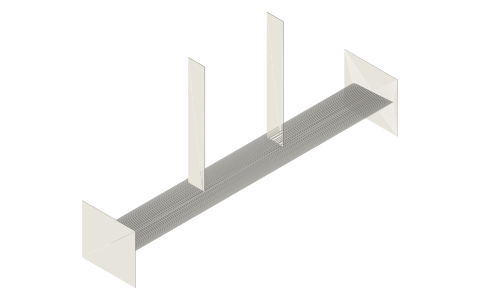
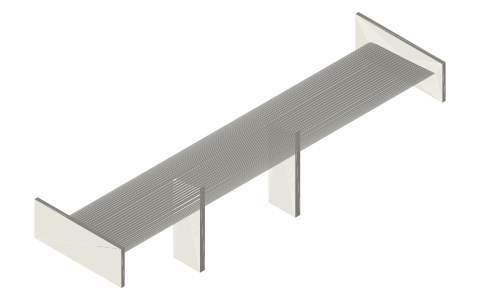
| gurney-flap-wickerbill-rear-wing | gurney rear wing: span 1600 × chord 250 mm at 6°, endplates 300 mm, inverted NACA 4412 section (mounts from below) | STEP · STL |
https://xemstudio.com/mcp to Claude, ChatGPT, Cursor or any MCP client (free, no account, one minute) and it can look up exact sizes, mating fits and free STEP/STL from every chat.Plain text: sheet.txt · JSON: /api/geometry?object=gurney-flap-wickerbill
Fits with
Questions
How tall should a Gurney be?
Liebeck used 1.25% of chord and expected drag penalties above that; 1-2% chord is the commonly cited range.
Why is it called a wickerbill?
Wickerbill is another name for the same trailing-edge tab (Wikipedia).