 Xem Studiomeasured geometry
Library › Car design › Car aero ·
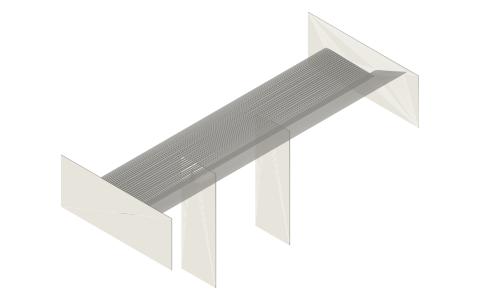
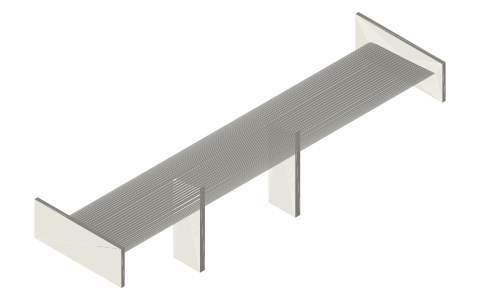
Dual-element (two-element) rear wing
What is a dual-element wing and why does it make more downforce? · Standard part · basis: Design rules and figures from the cited sources; example geometry by Xem Studio
Also called: dual element wing, two element wing, double element wing, main plane and flap, slotted wing car, wing gap overlap, multi element rear wing, flap gap race car wing, biplane wing car, 2 element GT wing, high downforce wing
Exact dimensions. True size, with no printing tolerance added.
- sizes
- 9 in table
Notes
- A dual-element wing adds a flap behind the main plane, separated by a small slot. The slot lets fresh air energise the flap's suction side so the pair can run far more camber before stalling than one element could.
- In Southampton's ground-effect tests the optimum slot was a 3.2% chord gap with 2.4% chord overlap, and the wing reached CL 3.03 (Zhang & Zerihan). In UIUC open-wheel front-wing tests, raising flap angle from 14 to 24 deg lifted CL from 1.95 to 2.37 (Jasinski & Selig).
- HP Academy pairs dual-element rear wings with 500-600 hp cars and larger splitters, i.e. more downforce means more drag and needs front balance to match.
- Used on: Champ Car and F1 front-wing configurations tested at UIUC.
- The file is a reference example built by Xem Studio from the numbers above (Geometry of the Zhang & Zerihan test wing; aoa is its 1 deg reference incidence.). Sizes the sources do not fix are illustrative; scale the example to your own vehicle.
Dual-element (two-element) rear wing size chart
| parameter | value or range | source |
|---|---|---|
| Main element chord | 223.4 mm (~0.59c) | Zhang & Zerihan |
| Flap chord | 165.7 mm (~0.44c) | Zhang & Zerihan |
| Reference (combined) chord / span | 380 mm / 1100 mm, AR 2.89 | Zhang & Zerihan |
| Optimum gap | 0.032c (12 mm) | Zhang & Zerihan |
| Optimum overlap | 0.024c (9 mm) | Zhang & Zerihan |
| Max CL, high flap angle | 3.028 at h/c 0.079 | Zhang & Zerihan |
| Flap deflection range tested | 4-44 deg (3D), 6-41 deg (2D) | Jasinski & Selig (UIUC) |
| CL at alpha 6 deg | 1.95 (flap 14 deg), 2.37 (flap 24 deg) | Jasinski & Selig (UIUC) |
| Swan-neck LMP wing, flap +8 deg | 1413 lb downforce | Mulsanne's Corner |
Where the files are
Other publishers' files are linked, not hosted. "verify" = check the license at the link before commercial use.
| University of Southampton / AIAA Journal | Aerodynamics of a Double-Element Wing in Ground Effect (Zhang & Zerihan, AIAA J. 41(6), 2003) | web | Publisher's page; dimensions are facts |
| University of Illinois / SAE | Experimental Study of Open-Wheel Race-Car Front Wings (Jasinski & Selig, SAE 1998) | web | Publisher's page; dimensions are facts |
| High Performance Academy | Aerodynamic performance devices for club level cars: front splitters | web | Publisher's page; dimensions are facts |
| Mulsanne's Corner | The Rise of the Swan Neck (2009 LMP rear wing CFD study) | web | Publisher's page; dimensions are facts |
Free files
★ Free files 1 parts. Xem Studio design: free to use, print and sell things from; not to be republished as files. Xem Studio Design License. index.json
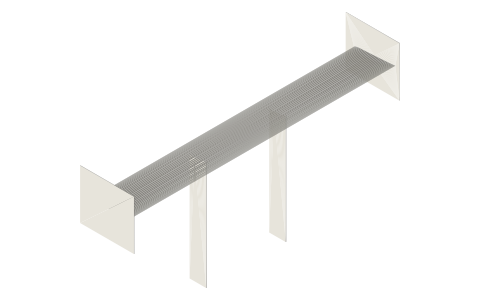
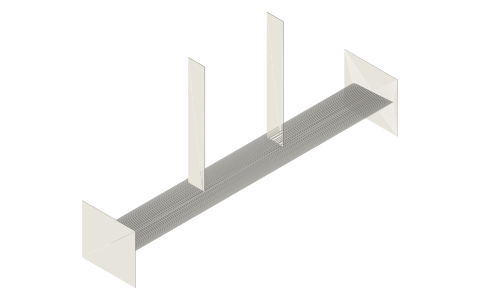
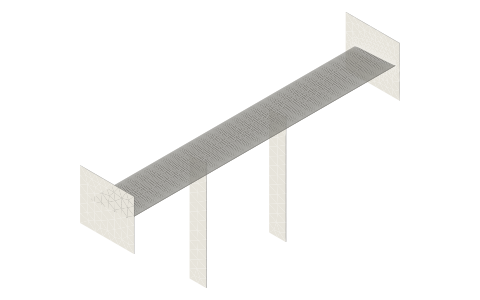
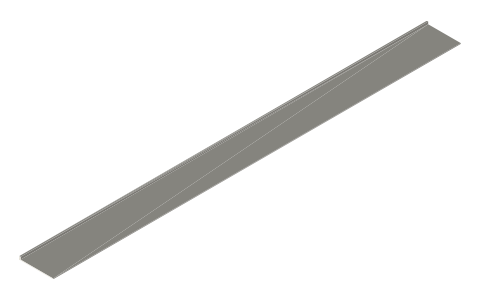
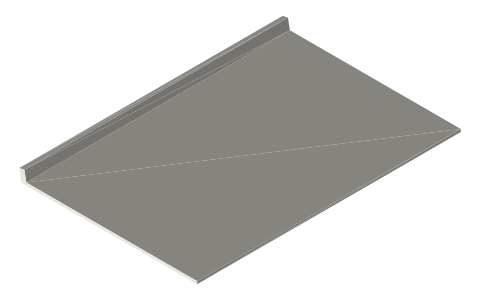
| rear-wing-dual-element-rear-wing | dual element rear wing: span 1100 × chord 380 mm at 1°, endplates 200 mm, inverted NACA 4412 section (mounts from below) | STEP · STL |
https://xemstudio.com/mcp to Claude, ChatGPT, Cursor or any MCP client (free, no account, one minute) and it can look up exact sizes, mating fits and free STEP/STL from every chat.Plain text: sheet.txt · JSON: /api/geometry?object=rear-wing-dual-element
Fits with
Questions
What gap should a two-element wing use?
The Southampton ground-effect test found 0.032c gap and 0.024c overlap optimal for its geometry (Zhang & Zerihan). Treat that as a starting point and test.