 Xem Studiomeasured geometry
Library › Car design › Car aero ·
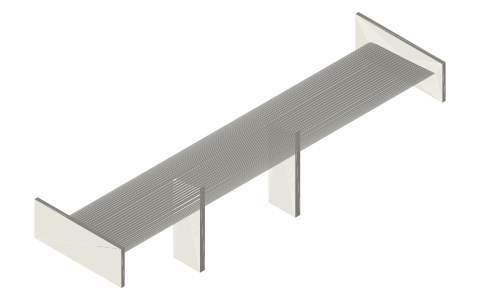
Single-element rear wing (race car)
What is a single-element rear wing and how does it make downforce? · Standard part · basis: Design rules and figures from the cited sources; example geometry by Xem Studio
Also called: rear wing, race car rear wing, single element wing, single plane wing, inverted wing downforce, how does a car wing work, rear wing angle of attack, GT wing, time attack wing, rear wing downforce drag, wing chord and span car
Exact dimensions. True size, with no printing tolerance added.
- sizes
- 7 in table
Notes
- A race-car rear wing is an inverted wing: its profile and angle push the rear of the car down, trading drag for rear grip. HP Academy notes that more curvature gives more downforce and more drag, while flatter profiles are more efficient but make less downforce (HPA rear wing theory).
- Downforce rises roughly linearly with angle at low angles while the lift-to-drag ratio slowly worsens; peak downforce comes with a little trailing-edge separation, and large-scale separation makes downforce fall (HPA).
- Size matters strongly: in a 2009 LMP CFD study, shrinking the wing from 2000 x 300 mm to 1600 x 250 mm cut downforce by 34% and drag by 31% (Mulsanne's Corner).
- Used on: Audi R15 (2009 LMP), Acura ARX-02a (2009 LMP).
- The file is a reference example built by Xem Studio from the numbers above (Span/chord from the 2009 LMP wing box (Mulsanne's Corner); 6 deg is the UIUC test incidence; endplate height illustrative. Scale to your car.). Sizes the sources do not fix are illustrative; scale the example to your own vehicle.
Single-element rear wing size chart
| parameter | value or range | source |
|---|---|---|
| Downforce vs angle | Roughly linear at low angle; L/D slowly worsens with angle | HPA rear wing |
| Peak downforce condition | Slight trailing-edge separation; large-scale separation reduces downforce | HPA rear wing |
| LMP rear wing box, 2008 rules | 2000 mm span x 300 mm chord | Mulsanne's Corner |
| LMP rear wing box, 2009 rules | 1600 mm span x 250 mm chord | Mulsanne's Corner |
| 2008 benchmark wing (CFD) | 1739 lb downforce, 226 lb drag, L/D 7.69 | Mulsanne's Corner |
| 2008 profile scaled to 2009 box | 1146 lb (-34%), 156 lb drag (-31%), L/D 7.36 | Mulsanne's Corner |
| Wind-tunnel test incidence (open-wheel front wing) | alpha = 6 deg at Re 1.1e6 | Jasinski & Selig (UIUC) |
Where the files are
Other publishers' files are linked, not hosted. "verify" = check the license at the link before commercial use.
| High Performance Academy | Aerodynamic performance devices for club level cars: rear wing theory | web | Publisher's page; dimensions are facts |
| Mulsanne's Corner | The Rise of the Swan Neck (2009 LMP rear wing CFD study) | web | Publisher's page; dimensions are facts |
| University of Illinois / SAE | Experimental Study of Open-Wheel Race-Car Front Wings (Jasinski & Selig, SAE 1998) | web | Publisher's page; dimensions are facts |
Free files
★ Free files 1 parts. Xem Studio design: free to use, print and sell things from; not to be republished as files. Xem Studio Design License. index.json
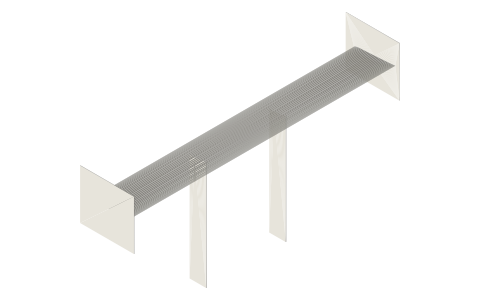
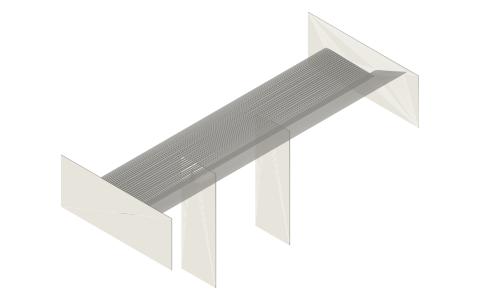
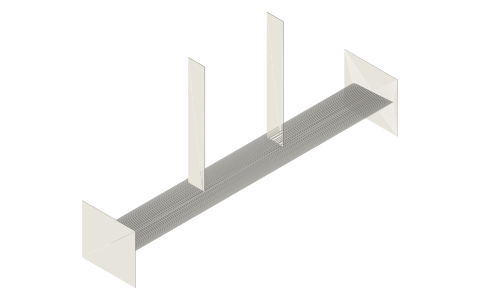
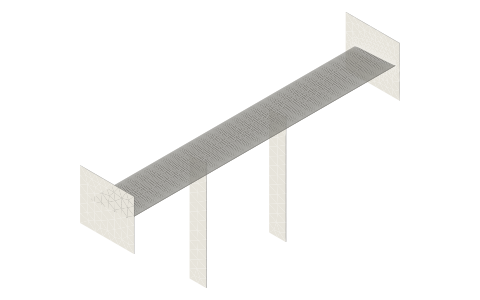
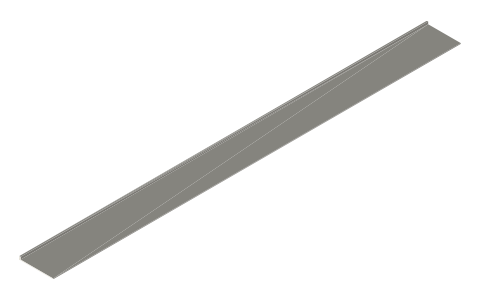
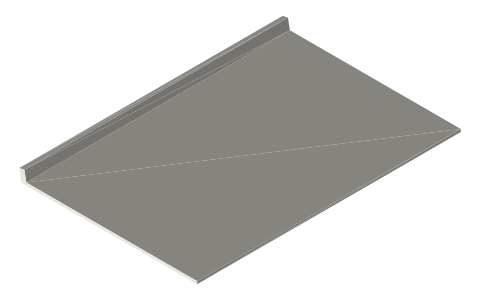
| rear-wing-single-element-rear-wing | single rear wing: span 1600 × chord 250 mm at 6°, endplates 300 mm, inverted NACA 4412 section (mounts from below) | STEP · STL |
https://xemstudio.com/mcp to Claude, ChatGPT, Cursor or any MCP client (free, no account, one minute) and it can look up exact sizes, mating fits and free STEP/STL from every chat.Plain text: sheet.txt · JSON: /api/geometry?object=rear-wing-single-element
Fits with
Questions
Is more wing angle always more downforce?
No. Downforce rises roughly linearly at low angles, but once large-scale separation occurs downforce falls while drag keeps rising (HPA).
Does a bigger wing always help?
It adds downforce and drag together; the 2008-to-2009 LMP wing-size cut lost 34% downforce and 31% drag (Mulsanne's Corner).