 Xem Studiomeasured geometry
Library › Stirling engines › Guide ·
Stirling engine configurations: which type needs which parts on this shelf
What are the different types of Stirling engine and what parts does each one need? · List / guide · basis: Standard taxonomy (alpha / beta / gamma by cylinder arrangement; drive mechanism; free-piston and non-mechanical variants) with the parts list for each drawn from this library
Long Earth Society build part. The index every LES video points at. The engines
- sizes
- 14 in table
Notes
- Three cylinder arrangements: alpha (two pistons, hot and cold cylinders), beta (displacer and piston in one cylinder), gamma (displacer cylinder plus a separate power cylinder). Then the drive: crank + con-rod, bell crank, rhombic, Ross yoke, Scotch yoke, swash plate, or none (free-piston, Ringbom, thermoacoustic, fluidyne).
- Every row's parts exist on the shelf as free STEP/STL except the rotary-displacer type. Pick the row, open the linked objects, print the calibration coupons first, and the parts fit each other: Ø3 pins, Ø5 shafts, 623/608 bearings, 10 mL syringes, 16 ga tri-clamp bores and 2020 frames are the common interfaces throughout.
- An agent asked to 'design a beta Stirling with a rhombic drive for a 2 in tri-clamp spool' should pull: rhombic-drive-kit, tri-clamp-displacers-and-heads (Ø46 × 90 displacer, crank head), tri-clamp-spool (2 in × 6 in), tri-clamp-ferrule, tri-clamp-end-cap gasket, regenerator-and-heat-materials, brass-tube-ks (5 mm tube rod), ball-bearings-metric (623), crank-conrod-flywheel-kit (flywheel), tea-light-candles or copper-pipe-type-l-m heat exchangers, and printer-calibration-coupons.
- LES: this is the index the LES videos point at: 'the parts for every engine type are on one page'.
Sizes
| type | mechanism | shelf objects | note |
|---|---|---|---|
| Gamma (crank) | displacer + separate power cylinder, 90° crank | crank-conrod-flywheel-kit, tri-clamp-displacers-and-heads, plastic-syringes, can-engine-printed-kit | easiest; LES can and tri-clamp engines |
| Beta (bell crank) | displacer and piston coaxial, bell crank + links | motion-mechanisms (bell crank, links), tri-clamp-displacers-and-heads | compact |
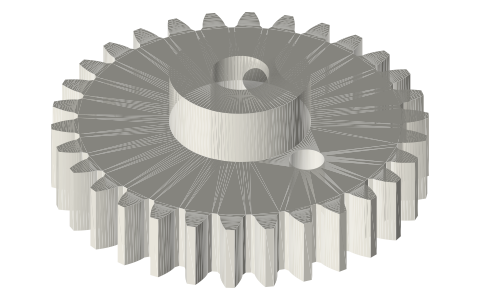
| Beta (rhombic drive) | counter-rotating crank gears, yokes | rhombic-drive-kit, spur-gears-involute | balanced, Philips |
| Alpha (V-twin) | two pistons 90° apart | alpha-twin-crank-90, plastic-syringes | highest specific power |
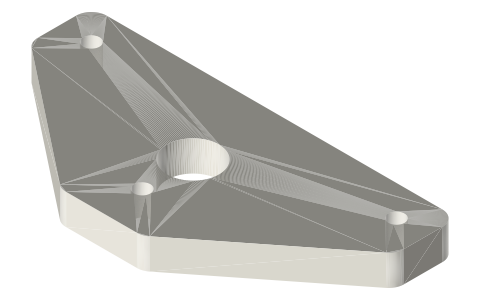
| Alpha (Ross yoke) | parallel cylinders, triangular rocker | ross-yoke-kit | straight-line motion |
| Scotch yoke / swash plate | sinusoidal or multi-cylinder | motion-mechanisms | no con-rod |
| Ringbom | free displacer on stops, crank piston | free-piston-core (stops), crank-conrod-flywheel-kit | semi-free-piston |
| Free-piston | flexures, gas springs, linear alternator | spiral-flexure-bearings, free-piston-core, linear-alternator-kit, nasa-fpse-references | NASA / Sunpower |
| LTD (coffee cup) | wide thin displacer, tiny piston | ltd-coffee-cup-engine-kit | runs on 15 K |
| Thermoacoustic (standing wave) | stack in a resonator, no pistons | thermoacoustic-stacks-and-resonators, tri-clamp-spool | LES main line |
| Thermoacoustic-Stirling (travelling wave, TASHE) | looped regenerator + resonator | regenerator-and-heat-materials, thermoacoustic-stacks-and-resonators, linear-alternator-kit | NASA TASHE |
| Fluidyne | water columns as pistons | fluidyne-manifold, copper-pipe-type-l-m | no moving parts |
| Lamina-flow (thermal lag) | one tube, one piston, no displacer | borosilicate-test-tubes, plastic-syringes, crank-conrod-flywheel-kit | simplest moving-part engine |
| Rotary displacer | rotating displacer in a drum | — (not on the shelf yet) | rare |
Where the files are
Other publishers' files are linked, not hosted. "verify" = check the license at the link before commercial use.
| Wikipedia | Stirling engine | web | CC BY-SA 4.0 (text) |
| Wikipedia | Rhombic drive | web | CC BY-SA 4.0 (text) |
| Wikipedia | Thermoacoustic heat engine | web | CC BY-SA 4.0 (text) |
| Ohio University | Stirling cycle machine analysis (Urieli) | web | Author's site |
| Long Earth Society | Engine builds | web, video | LES site |
Xem scan
Not planned The manufacturer publishes CAD; the sheet is here so an assistant can answer without opening a PDF.
Plain text: sheet.txt · JSON: /api/geometry?object=stirling-configurations-guide
Fits with
Questions
What is the difference between alpha, beta and gamma Stirling engines?
Alpha: two pistons in two cylinders (hot, cold). Beta: a displacer and a power piston sharing one cylinder. Gamma: a displacer cylinder and a separate power cylinder joined by a passage. Same cycle, different packaging.
Which Stirling engine is easiest to build?
Gamma with a crank: the can engine or the 2 in tri-clamp gamma. The LTD is next (runs on a warm hand but needs flat plates). Thermoacoustic has no moving parts but needs a heater and tuning.
Which Stirling type is best balanced?
Beta with a rhombic drive: the two mirror cranks cancel side loads and shaking forces; it is why Philips used it.